
The Future of Autonomous Procurement & AI Sourcing
Stay ahead of the curve with our curated library of articles, case studies and expert insights. Learn how leading organisations deploy AI agents to automate strategic sourcing, reduce supply chain risk and unlock cost savings.

BCG research examines the organizational challenges of scaling agentic AI within procurement departments. The report details how process redesign and governance can lead to 60% cost reductions and enhanced competitive advantage.
Key Takeaways
- Enterprises must adapt organizational design and governance to fully leverage the benefits of agentic AI.
- AI agents can achieve cost reductions exceeding 60% when procurement processes are redesigned end-to-end.
- Combining technology deployment with capability building yields significantly stronger outcomes than isolated pilots.
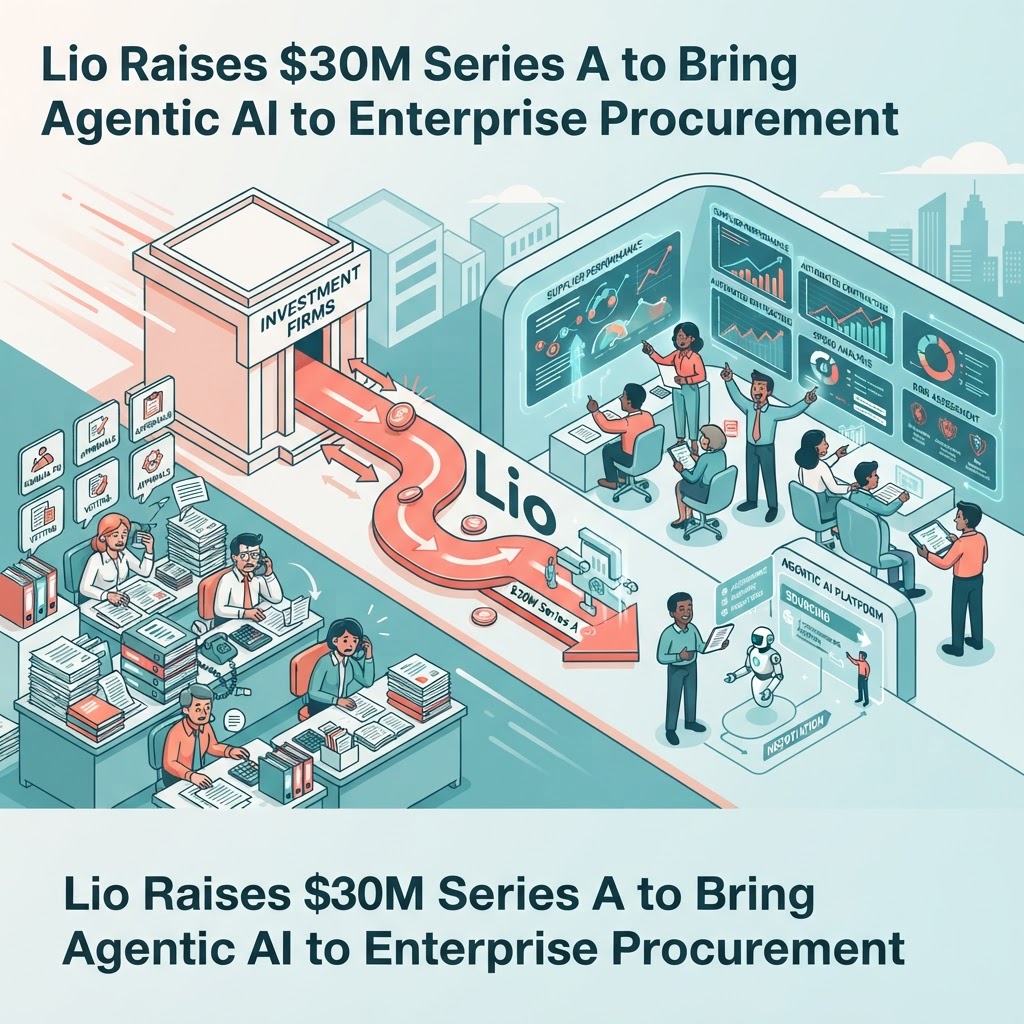
This article covers the $30 million Series A funding of Lio, an AI-native company building a virtual workforce for enterprise procurement. It highlights how agentic AI platforms are enabling end-to-end purchasing execution to replace traditional, manual procurement operations.
Key Takeaways
- Lio secured $30 million in Series A funding led by Andreessen Horowitz to scale its agentic AI platform.
- The platform utilizes virtual buyers to execute end-to-end procurement tasks alongside human teams.
- The technology is designed to manage complex enterprise spend for Global 2000 and Fortune 500 companies.
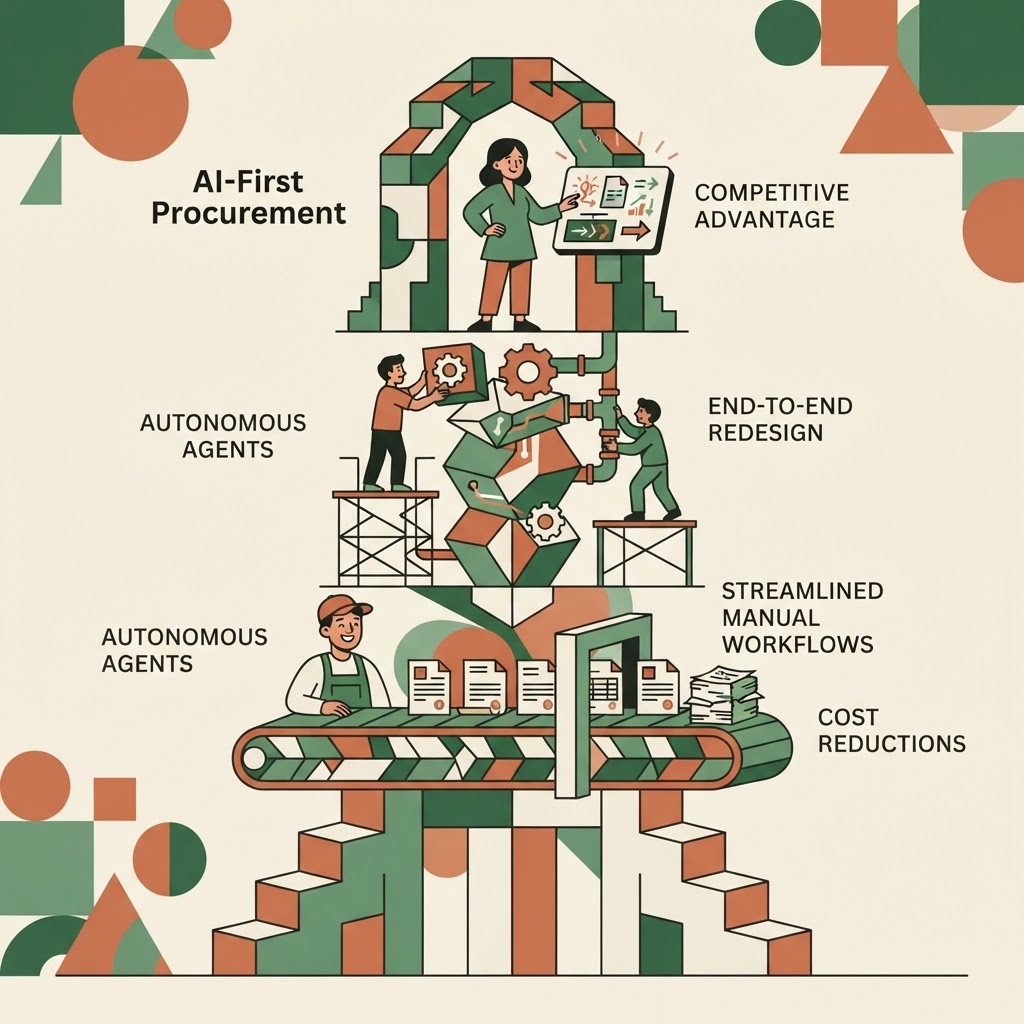
This report explores how autonomous agents are transforming procurement by streamlining manual workflows and driving significant cost reductions. It emphasizes that successful AI deployment requires an end-to-end redesign of the source-to-pay architecture.
Key Takeaways
- AI in procurement has the potential to free up buyer capacity by up to 60%.
- Successful implementation requires a holistic redesign of the entire source-to-pay workflow.
- Autonomous procurement can reduce overall costs by approximately 15% to 45%.

Explore how agentic AI is revolutionizing autonomous sourcing by utilizing specialized AI agents to monitor markets, manage risks, and execute negotiations. This guide details the shift from linear workflows to parallel agent networks that enhance procurement agility and scalability.
Key Takeaways
- Agentic AI replaces linear sourcing workflows with parallel networks of specialized agents for market monitoring, risk assessment, and negotiation.
- Large Language Models (LLMs) enable the extraction of structured facts from unstructured data like contracts and supplier emails at machine speed.
- The technology allows procurement teams to manage significantly more sourcing events and suppliers without a linear increase in headcount.

African Marine Solutions (AMSOL) has partnered with Zycus to implement an agentic AI platform for maritime procurement operations, according to [AMSOL Selects Zycus to Transform Maritime Procurement with Agentic AI](https://www.africaoutlookmag.com/supply-chain/amsol-selects-zycus-to-transform-maritime-procurement-with-agentic-ai). The system unifies sourcing, contracting, and supplier management to streamline processes across corporate offices and vessels.
Key Takeaways
- AMSOL is utilizing agentic AI to unify sourcing, contracting, and payments onto a single platform.
- The implementation supports complex procurement operations across both corporate offices and maritime vessels.
- Agentic AI helps streamline supplier management and operational efficiency in the Southern African maritime sector.

This article explores how agentic AI shifts procurement professionals from task executors to curators of an intelligent ecosystem, as discussed in [Why Agentic AI Could Transform Procurement](https://hbr.org/2026/08/why-agentic-ai-could-transform-procurement). It highlights the transition toward autonomous systems that apply human judgment only where AI reaches its limits.
Key Takeaways
- Procurement professionals are evolving into curators of agentic ecosystems rather than simple task executors.
- Human judgment remains critical for addressing complex scenarios where AI capabilities fall short.
- The shift toward agentic AI enables a more proactive and value-driven procurement function.

This piece examines the shift from general-purpose AI bots to specialized, collaborative agent networks that manage the procurement lifecycle. It highlights how these agents maintain context and memory to execute complex tasks without constant human intervention.
Key Takeaways
- The industry is moving toward specialized agents for sourcing, legal, and risk that collaborate to monitor milestones and trigger actions autonomously.
- Unlike standard LLMs, agentic systems maintain long-term memory of budgets, stakeholder objections, and compliance history to manage complex sourcing events.
- Proving ROI remains a challenge, as many enterprise AI pilots have historically struggled to deliver measurable profit-and-loss impact.
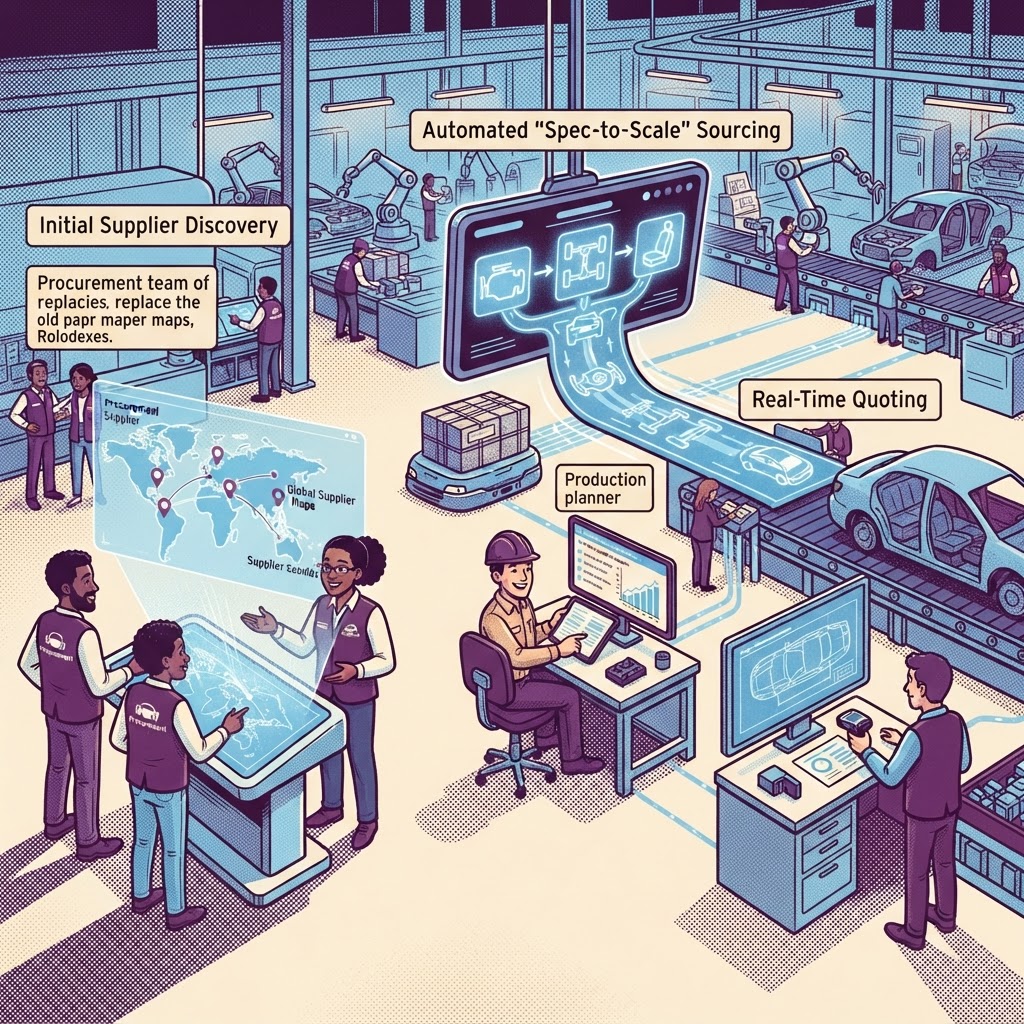
This feature examines how LightSource.ai applies agentic AI to replace outdated manual spreadsheets in the automotive industry. The technology automates the entire 'spec-to-scale' procurement process, from initial supplier discovery to real-time quoting.
Key Takeaways
- Agentic AI replaces manual, spreadsheet-heavy processes in complex automotive sourcing.
- The platform automates the end-to-end 'spec-to-scale' procurement lifecycle.
- AI-driven automation facilitates faster supplier discovery and real-time quoting capabilities.

This article examines how agentic AI is embedding intelligence across supply chain networks to drive autonomous decision-making and self-learning. It highlights the transition from traditional automation to systems that can independently sense demand and mitigate risks.
Key Takeaways
- Agentic AI systems embed intelligence at every node of the supply network to facilitate autonomous actions and decision-making.
- These systems are designed to augment human capabilities by handling complex data analysis and routine execution tasks.
- The technology enables supply chains to become self-learning entities that continuously improve through historical data and real-time insights.
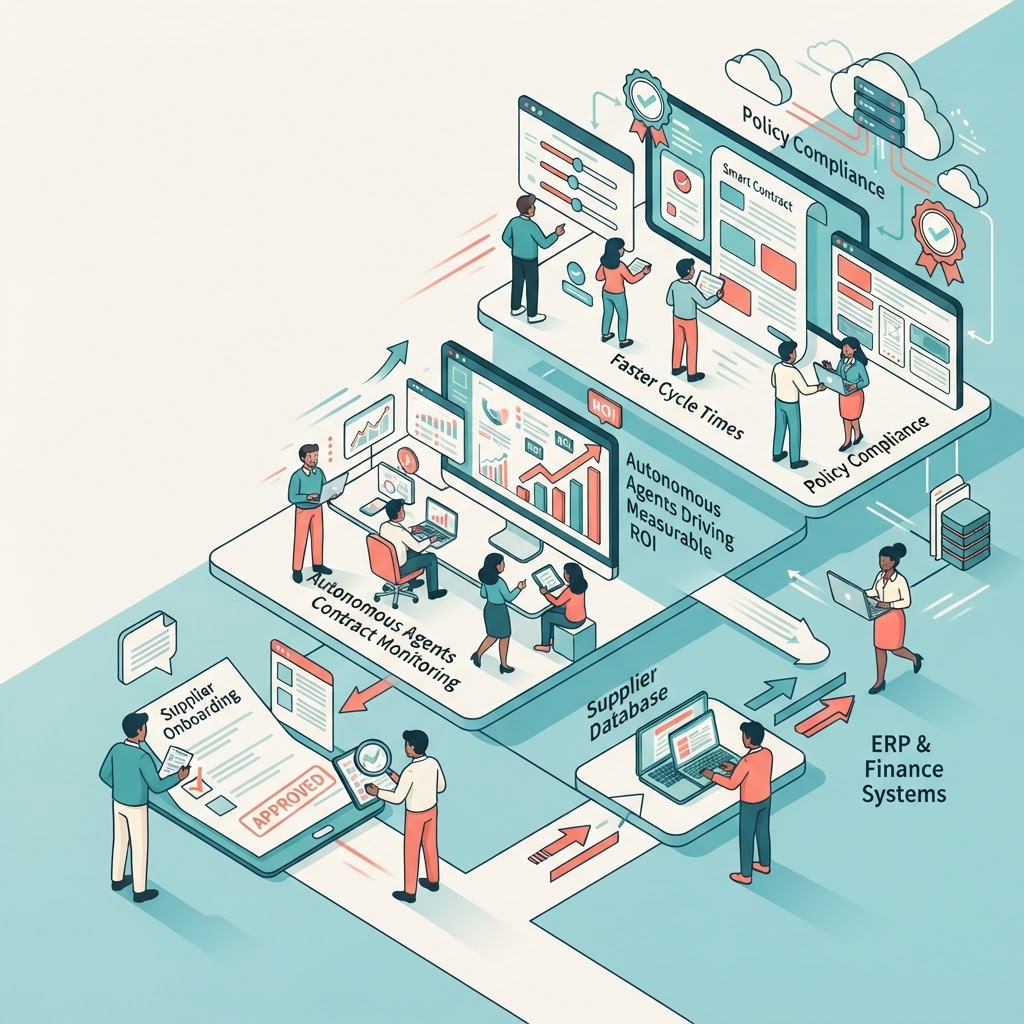
This comprehensive guide details how AI agents automate complex procurement workflows like supplier onboarding and contract monitoring by integrating with ERP and finance systems. Learn how autonomous agents drive measurable ROI and faster cycle times while maintaining strict policy compliance.
Key Takeaways
- AI agents automate multi-step workflows including supplier onboarding, contract monitoring, and spend analysis.
- Organizations adopting autonomous agents report up to 90% faster cycle times and significantly lower administrative costs.
- Successful deployment requires strict guardrails to ensure autonomous actions comply with corporate purchasing policies.

Explore how agentic AI is revolutionizing the procurement landscape by enabling real-time optimization of supplier performance and risk management. This report highlights how early adopters are achieving up to five times higher ROI and significant productivity gains through autonomous sourcing.
Key Takeaways
- AI-enabled procurement can increase a company’s return on investment up to five times while boosting productivity by 60%.
- Agentic AI allows organizations to optimize procurement demand, supplier performance, and risk in real-time.
- Early adopters of scaled agentic AI solutions are projected to save up to $180 million by compounding their competitive advantage.

Fairmarkit has introduced Total Agentic Sourcing, a pioneering platform that deploys AI agents to autonomously manage enterprise spend across major ERP systems. This solution aims to streamline both tail and strategic spend by automating complex sourcing workflows.
Key Takeaways
- Total Agentic Sourcing is the first platform to deploy AI agents for autonomous sourcing across all enterprise spend categories.
- The platform integrates with leading ERPs to put AI to work directly within existing enterprise workflows.
- AI agents are designed to handle both tail spend and more complex sourcing requirements autonomously.
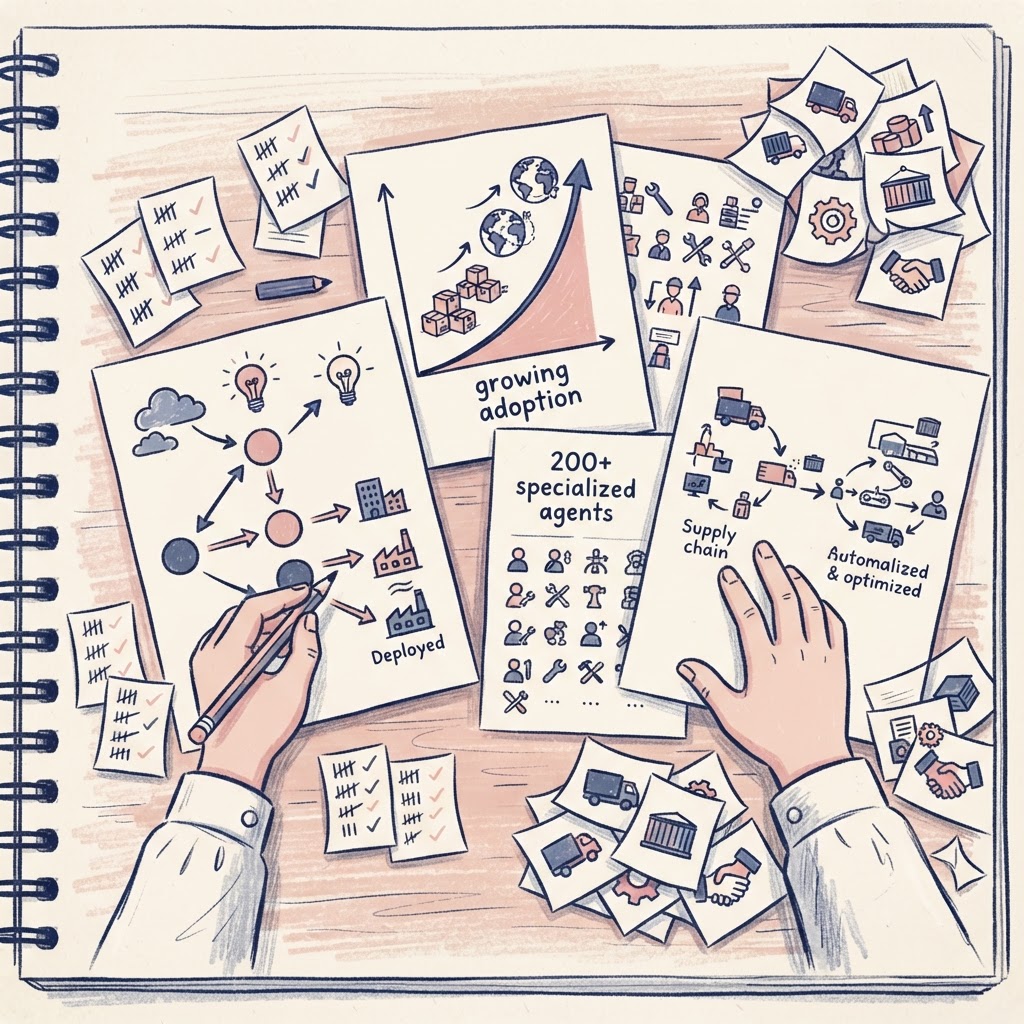
SAP has officially transitioned from AI concepts to deployed products with the launch of over 200 specialized Joule agents for supply chain automation. The article highlights the growing adoption of agentic AI in enterprise applications and the current gap in production-ready implementations.
Key Takeaways
- SAP launched 50+ Joule Assistants orchestrating 200+ specialized agents to automate procurement workflows.
- While 80% of enterprise apps now embed AI agents, only 31% of organizations have them in active production.
- The deployment marks a significant shift toward the autonomous enterprise where AI handles end-to-end supply chain tasks.
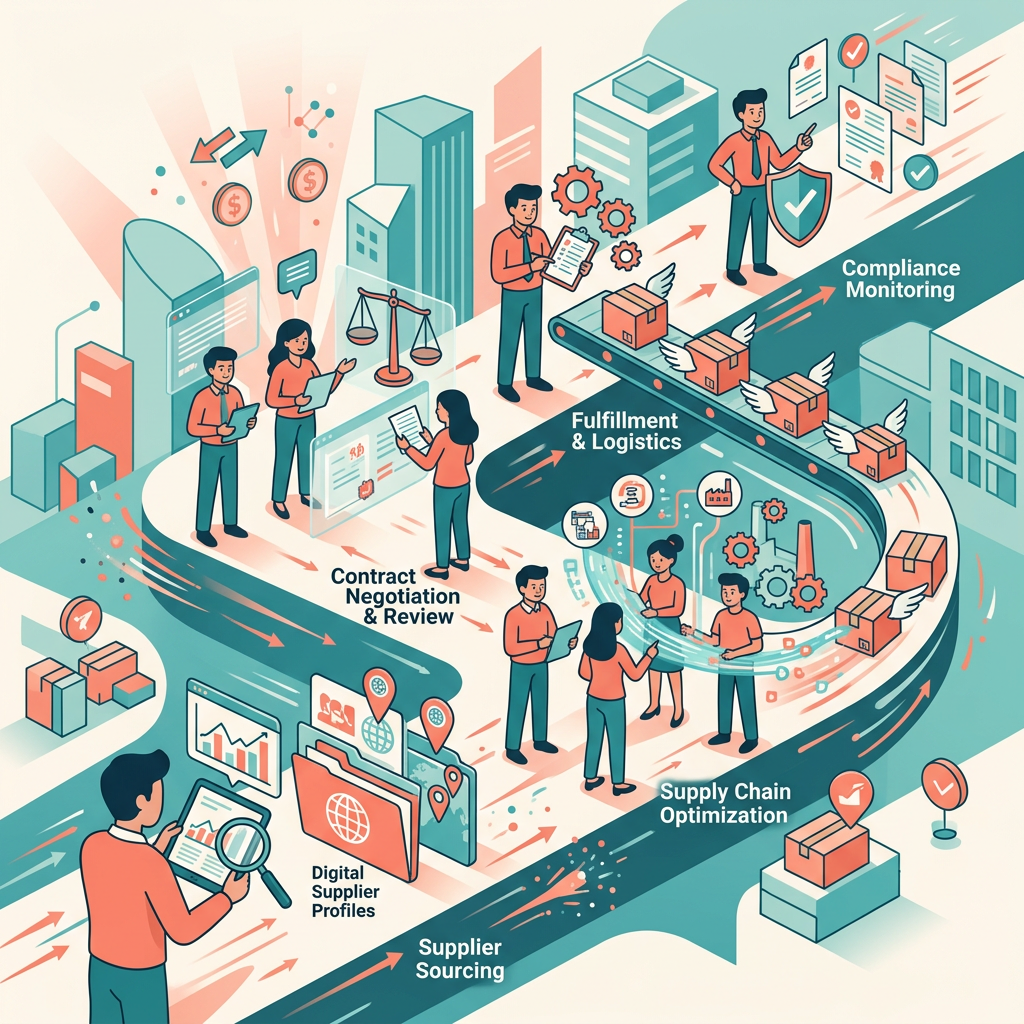
This report explores how multiagentic AI systems are revolutionizing procurement by moving beyond simple automation to autonomous decision-making. It details how these agents handle complex tasks like contract reviews, supplier onboarding, and compliance monitoring to drive operational efficiency.
Key Takeaways
- Autonomous agents can now independently review contracts and benchmark pricing against market trends.
- Multiagentic systems streamline supplier onboarding and continuous compliance monitoring.
- The shift to agentic AI allows procurement teams to focus on high-level strategy rather than execution.
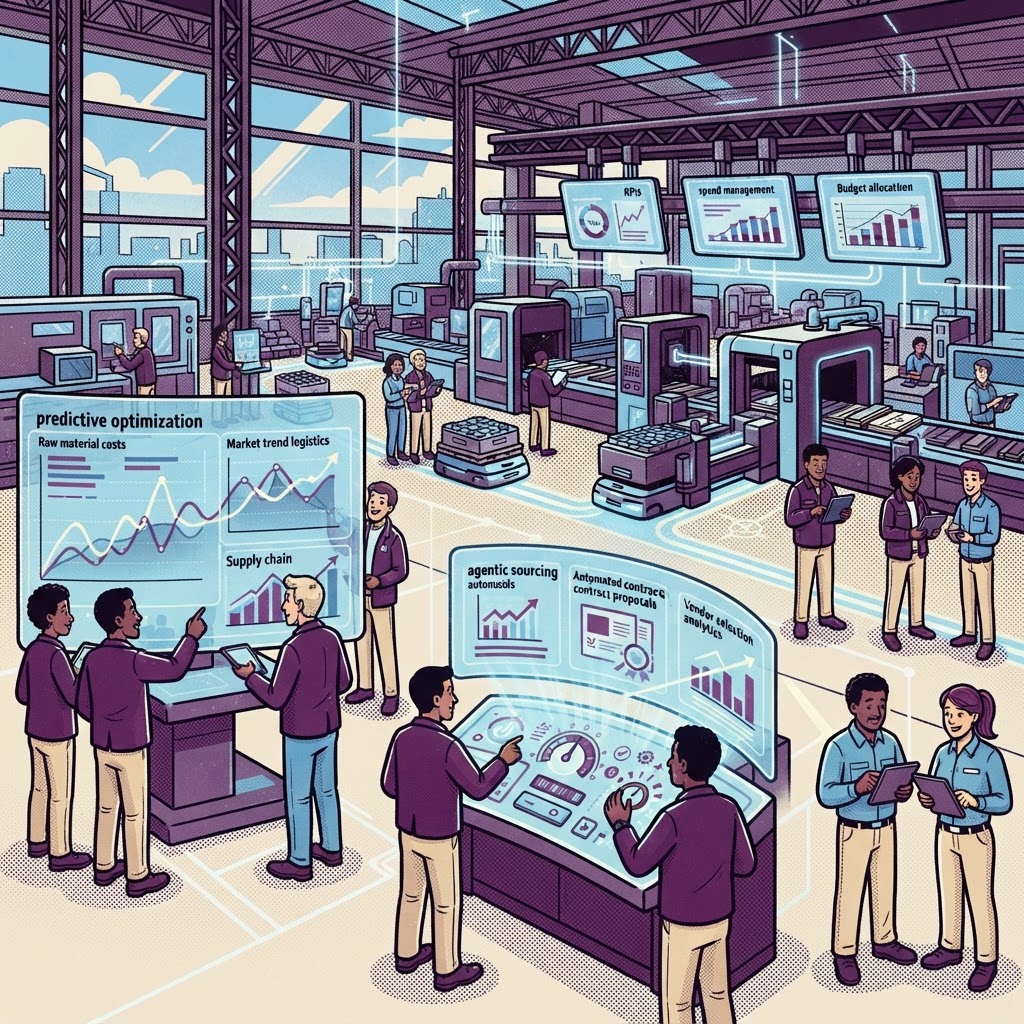
This article explores the 2026 procurement landscape where autonomous AI is bridging the productivity gap and redefining spend management. Learn why leading organizations are increasing technology budgets to integrate agentic sourcing and predictive optimization into their workflows.
Key Takeaways
- Over 50% of procurement organizations are planning to implement agentic AI systems to automate routine work and unlock strategic capacity.
- There is a 55-percentage-point gap between organizations owning e-sourcing software and those utilizing truly AI-enabled intelligence.
- Specialist vendors are currently leading the market in advanced autonomous capabilities such as predictive optimization and autonomous negotiation.
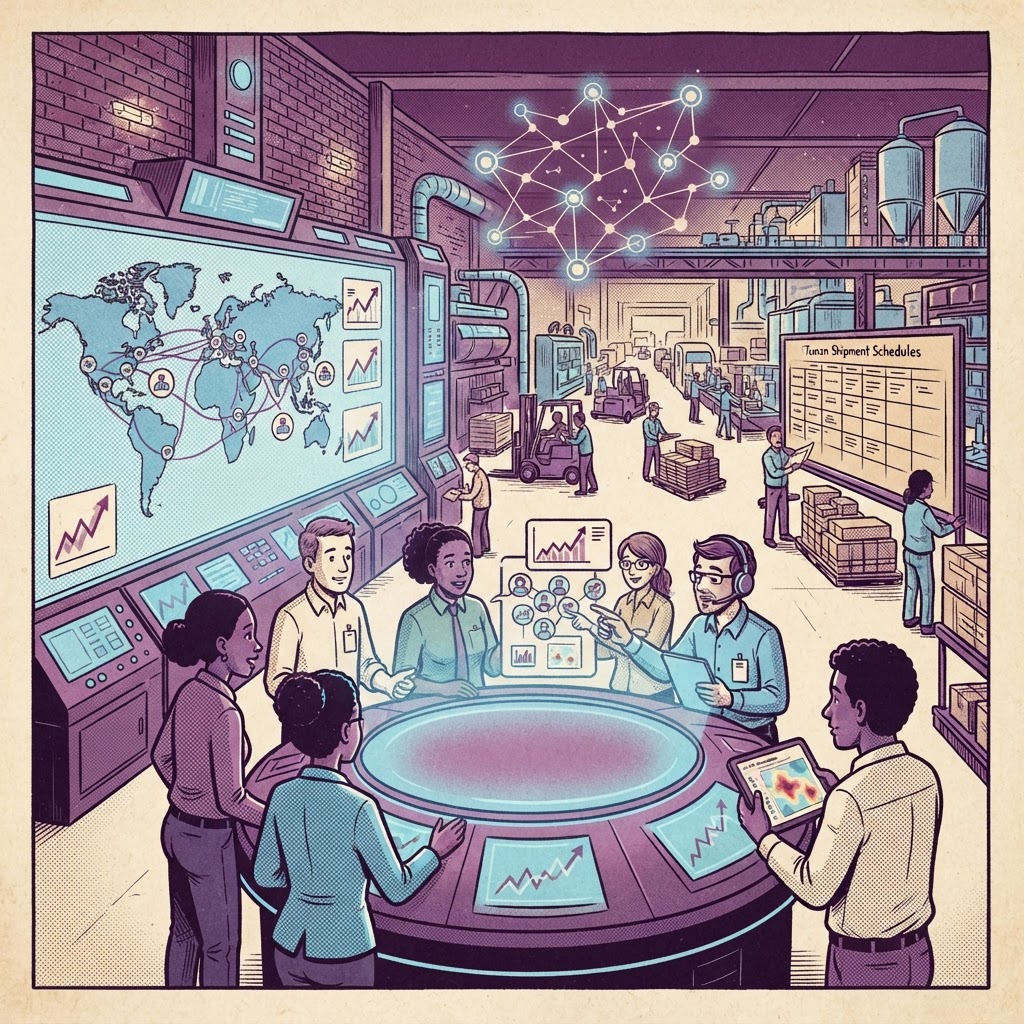
Discover how AI agents are transforming procurement from a reactive function into a proactive strategic powerhouse through real-time data insights. These autonomous digital workers monitor supplier performance and market risks to ensure supply chain resilience and competitive advantage.
Key Takeaways
- AI agents can autonomously reroute shipments and adjust sourcing strategies in real-time based on external factors like weather disruptions.
- Digital workers mitigate supplier risk by continuously monitoring market conditions, expense analysis, and performance factors.
- The technology enables procurement professionals to move beyond historical data to make informed, intuitive decisions for their customers.

This report examines how new agentic AI platforms are transforming B2B sourcing and cross-border commerce. It highlights how these technologies are enabling procurement teams to automate complex procurement cycles and improve global supply chain efficiency.
Key Takeaways
- Agentic AI is fundamentally changing the operational rules for B2B sourcing and procurement teams.
- Platforms like Alibaba's Accio and startups like Sazo are leading the integration of autonomous agents in commerce.
- The adoption of these tools signals a broader industry shift toward AI-driven, automated procurement workflows.

This article explores the shift from experimental AI to operational agentic systems within procurement. It highlights leading vendors like Coupa, GEP, and Globality that are deploying specialized AI agents to handle tasks ranging from sourcing event creation to autonomous bid comparison.
Key Takeaways
- 58% of the procurement market is now actively using or piloting AI, ending the 'wait and see' era.
- Major vendors are moving beyond simple automation to orchestrating persona-based agents for complex sourcing workflows.
- The industry is grappling with the critical balance of how much autonomy should be granted to AI agents without human oversight.

Leading organizations are redesigning procurement functions around agentic AI to capture substantial value and productivity gains. This shift enables autonomous agents to monitor demand, performance, and risk while executing complex negotiation strategies.
Key Takeaways
- Organizations deploying AI effectively can increase their annual return on investment by up to five times.
- Agentic AI enables a sixty percent boost in productivity by automating demand forecasting and category optimization.
- Real-time monitoring of supplier performance and market shifts allows for proactive risk mitigation and value capture.

Agentic AI represents a shift from basic content generation to the execution of governed, end-to-end procurement workflows. By coordinating sourcing, contracting, and compliance, multiagentic systems create connected enterprise ecosystems that adapt to market shifts in real time.
Key Takeaways
- Multiagentic systems move beyond simple task automation to orchestrate complex, multistep procurement workflows.
- A strong enterprise data core is foundational for scaling context-aware decision-making across the source-to-pay lifecycle.
- Successful transformation requires a balance of autonomous execution, robust governance, and human-in-the-loop oversight.

The 2025 Key Issues Study identifies agentic AI as a top priority for procurement leaders seeking to navigate economic volatility. The research tracks the rapid adoption of autonomous agents that perform multi-step tasks without constant human oversight, marking a new era of supply chain efficiency.
Key Takeaways
- A massive 3,000% increase in enterprise interest in agentic AI compared to previous generative models.
- Procurement technology budgets increasing by over 5% to support autonomous sourcing and spend analytics.
- Adoption of 'intelligent agents' capable of automating up to 80% of source-to-pay processes.
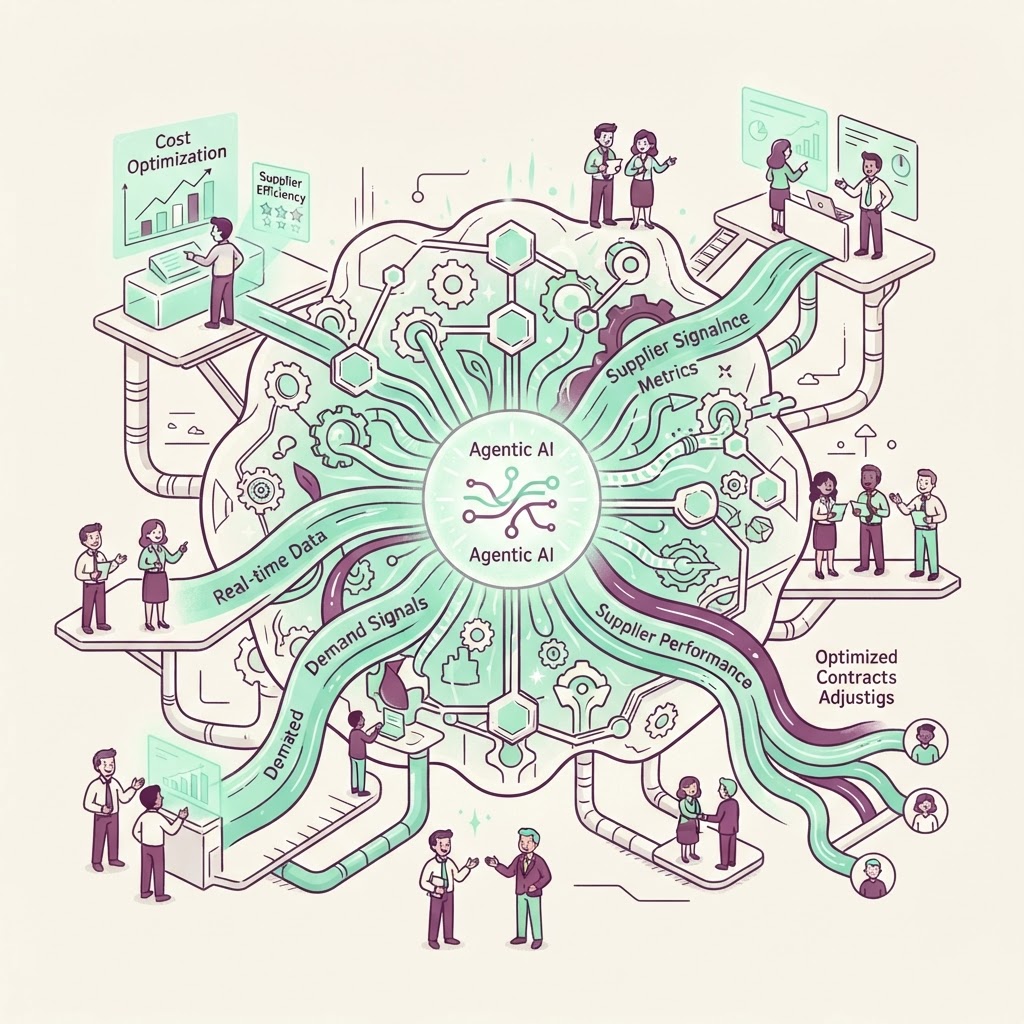
Bain & Company explores how agentic AI solutions are projected to save organizations millions by optimizing procurement demand and supplier performance in real-time. The report emphasizes the shift from task automation to autonomous processes that reshape entire operating models.
Key Takeaways
- Effective AI deployment can increase procurement annual ROI up to five times and boost productivity by over 60%.
- Agentic AI solutions enable real-time monitoring of demand forecasts and supply chain risks to prevent value leakage.
- Leading firms are redesigning their procurement functions from the ground up around autonomous AI agents rather than legacy systems.
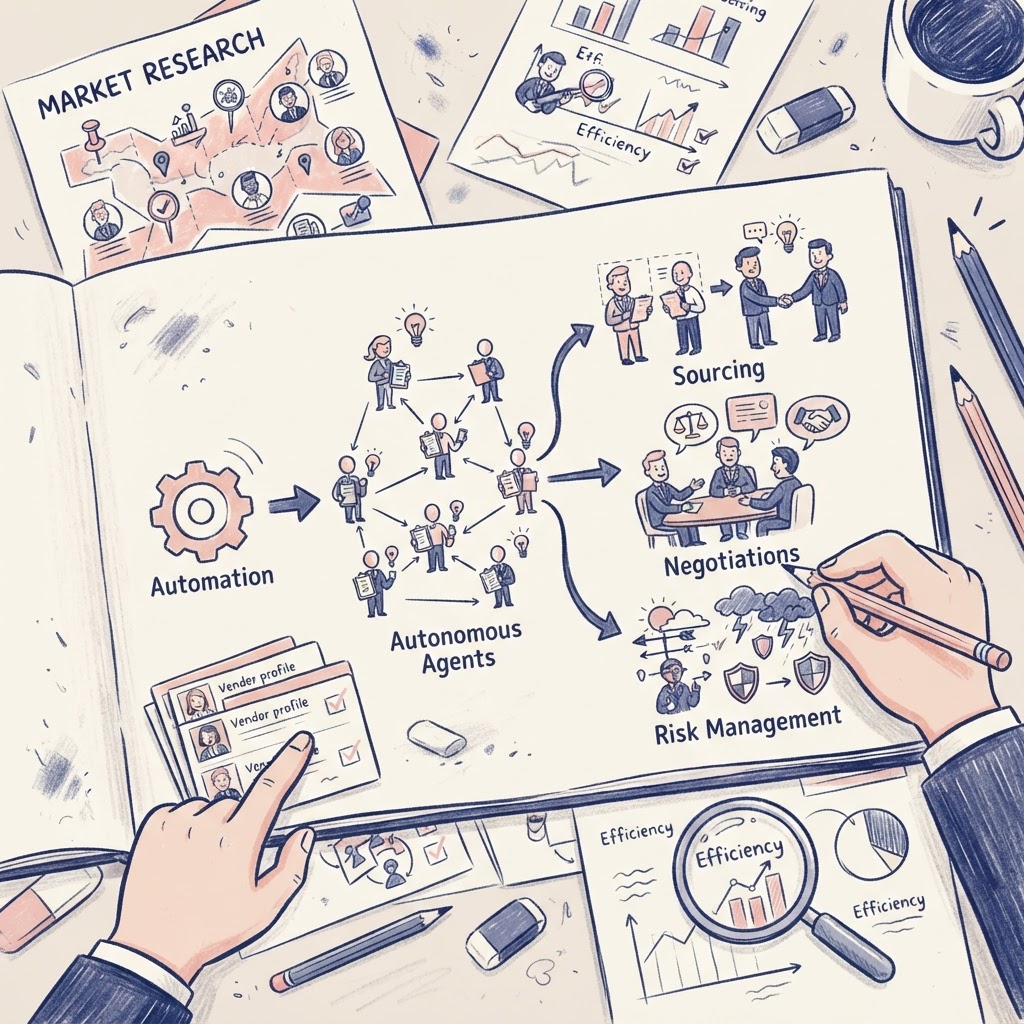
This article highlights the evolution of procurement from simple automation to the use of autonomous agents capable of managing the entire source-to-pay lifecycle. It profiles leading vendors who are successfully embedding agentic AI into core workflows to handle sourcing, negotiations, and risk management.
Key Takeaways
- Autonomous agents are now performing complex tasks like supplier discovery and contract review without manual intervention.
- Enterprise adoption is moving toward agentic orchestration where multiple specialized agents collaborate across finance and legal functions.
- Market leaders are focusing on closing the loop for routine purchasing categories to free human teams for strategic work.
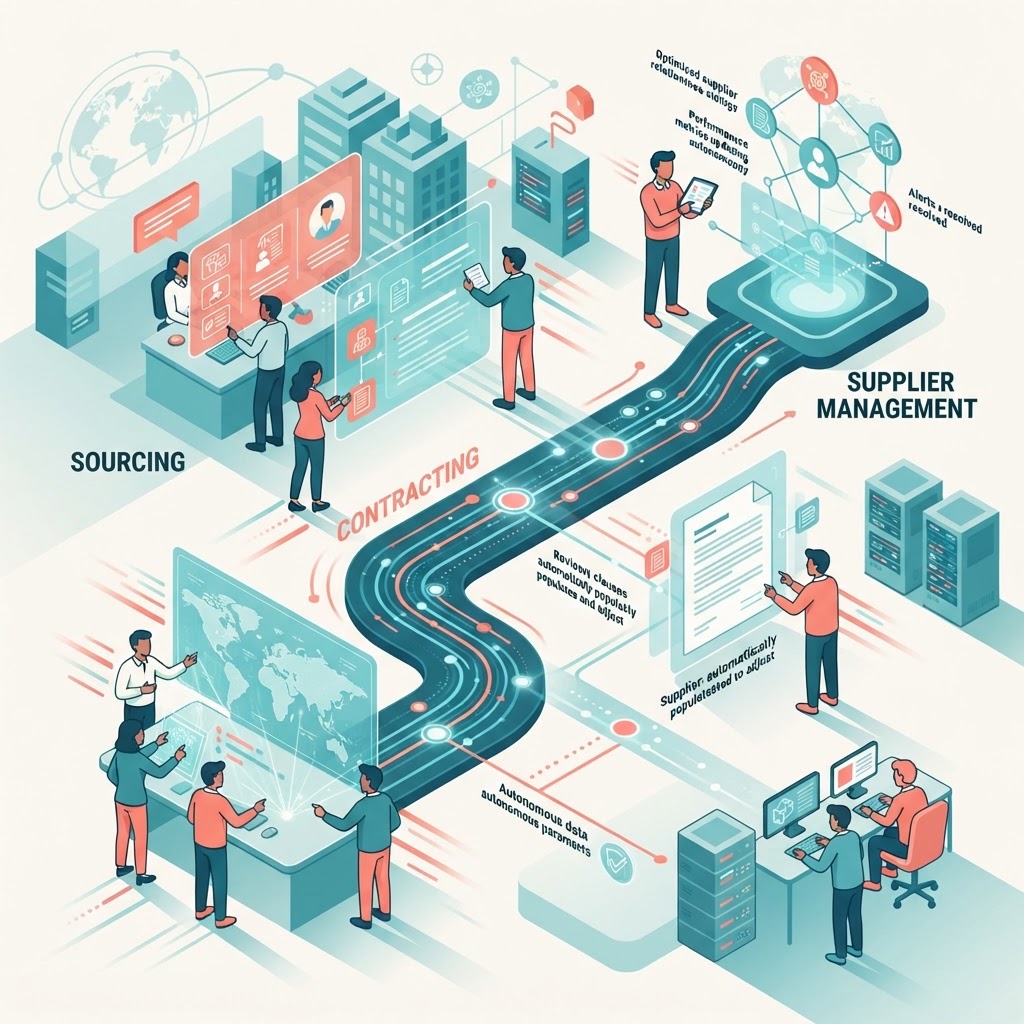
Procurement leaders are moving beyond isolated AI pilots to a complete redesign of workflows centered on agentic AI models. These systems enable autonomous execution across sourcing, contracting, and supplier management to drive substantial productivity gains and strategic value.
Key Takeaways
- Agentic AI transitions procurement from user-triggered assistants to autonomous, goal-driven actors.
- Early adopters are seeing productivity increases of up to 60% by embedding AI into core operating models.
- The focus is shifting from simple task automation to higher-order autonomous negotiation and risk management.

This article explores the 2026 frontier of agentic AI and its ability to manage multi-step sourcing workflows autonomously. It details how AI agents analyze unstructured documents like contracts and invoices to drive significant efficiency improvements in the supply chain.
Key Takeaways
- McKinsey estimates that agentic AI can drive efficiency improvements of 25 to 40 percent in procurement processes.
- By mid-2026, only 36 percent of CPOs felt confident that their internal data was ready for full AI integration.
- Agentic AI transitions the function from basic task automation to autonomous end-to-end sourcing management.

This report highlights the 2026 surge in agentic AI adoption within procurement, where autonomous agents independently negotiate supplier contracts and close deals. It examines how procurement has surpassed other enterprise functions in AI frequency of use and strategic confidence.
Key Takeaways
- Mentions of agentic AI in enterprise settings grew by over 3,000 percent between 2024 and 2025.
- Procurement and IT lead all corporate functions in AI usage frequency and overall organizational confidence.
- Autonomous systems are now essential for managing high-volume negotiations that exceed the capacity of human teams.
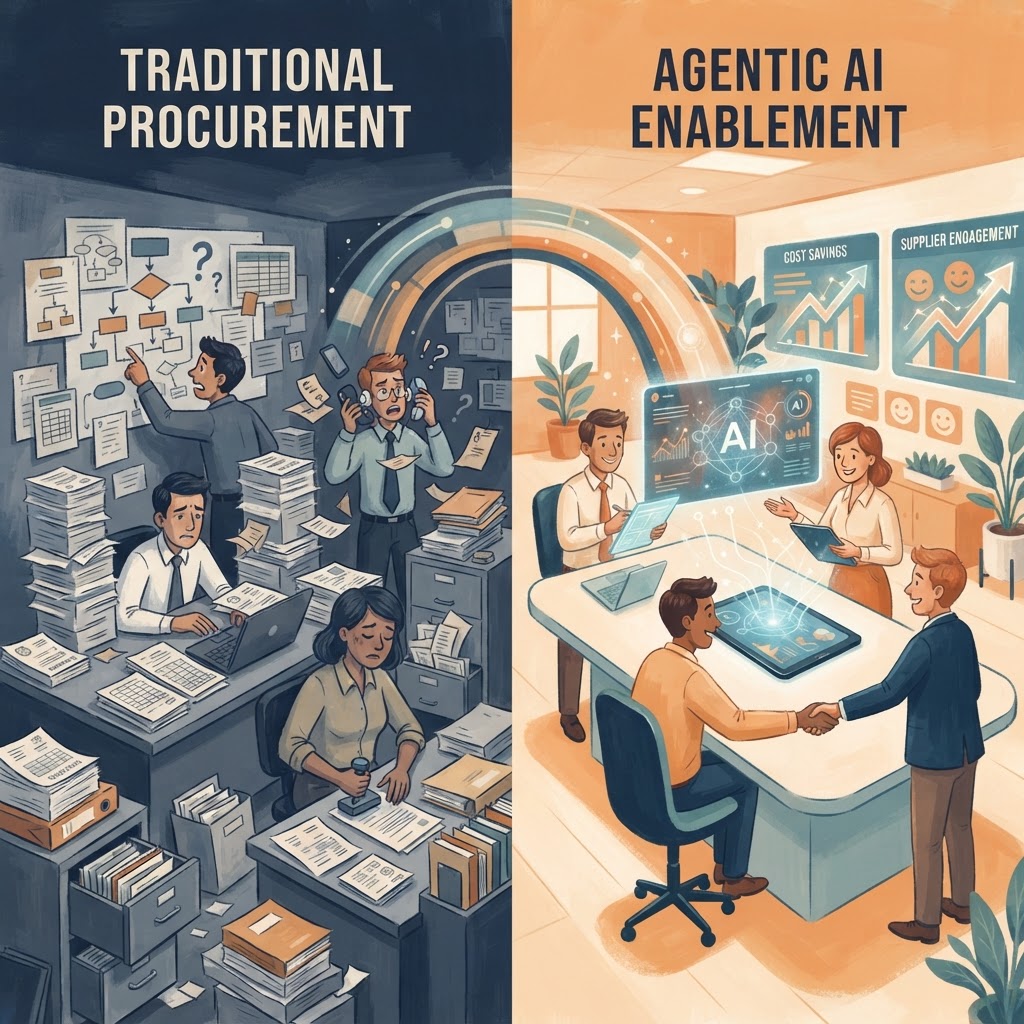
This article provides evidence-based insights into the production deployment of agentic AI across the source-to-pay lifecycle. It features real-world outcomes from major enterprises, demonstrating significant cost savings and improved supplier engagement through autonomous negotiation and intake orchestration.
Key Takeaways
- Autonomous negotiation agents have demonstrated the ability to secure supplier agreements at a rate of sixty-eight percent with a four-fold return on investment.
- Linked AI agents can achieve twenty-nine percent savings on complex business process outsourcing categories by integrating market and spend data.
- Procurement intake managed through conversational AI agents has improved user satisfaction scores by forty percent while increasing spend under management.
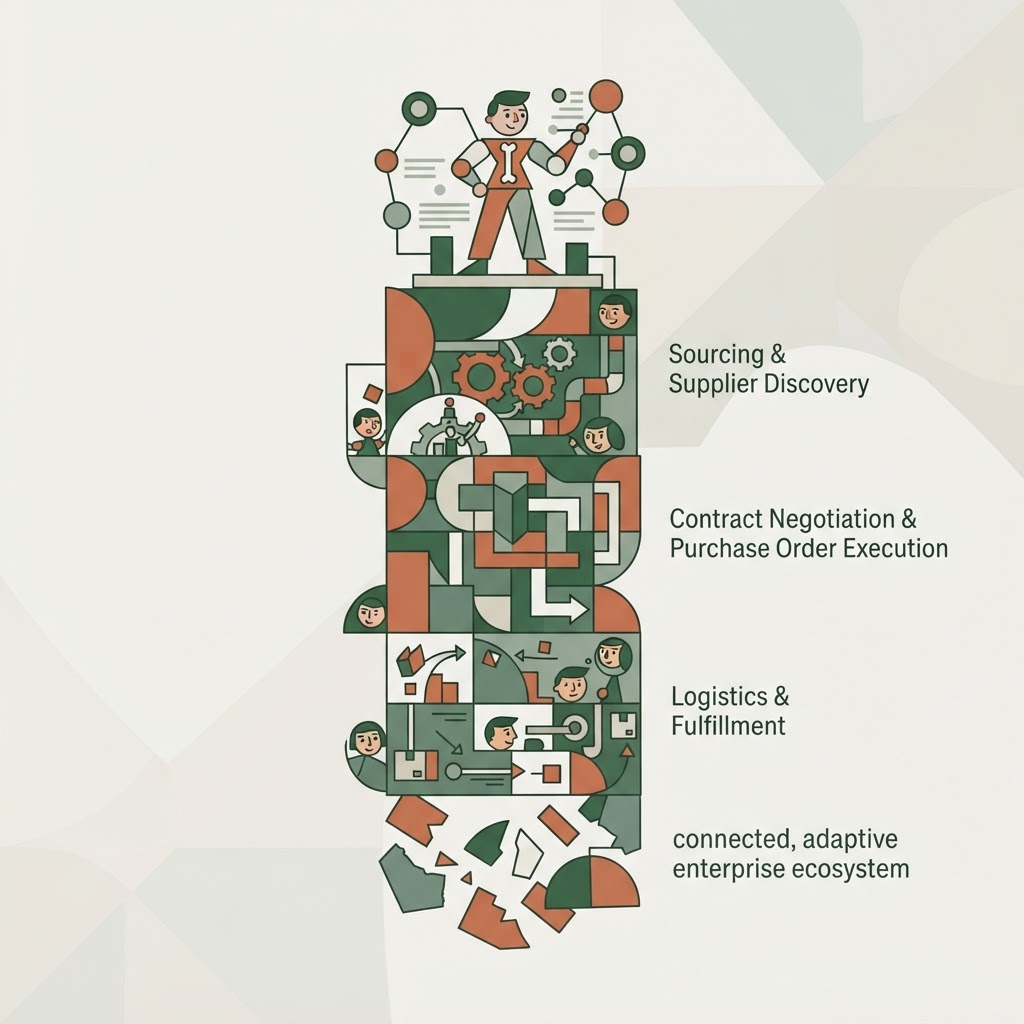
Deloitte explores how agentic AI is redefining procurement by executing governed, end-to-end workflows instead of just generating content. The shift toward multi-agentic systems helps transform siloed automation into a connected, adaptive enterprise ecosystem.
Key Takeaways
- Agentic AI moves beyond generative AI by proactively orchestrating multi-step workflows across data, tools, and stakeholders.
- Multi-agent systems enable the autonomous execution of specialized tasks such as contract benchmarking and automated supplier onboarding.
- A robust enterprise data core is identified as a foundational requirement for scaling agentic solutions and ensuring context-aware decisions.

This report examines the transition from isolated AI experiments to the scaling of agentic procurement models across sourcing and contracting. It highlights how leading organizations are embedding autonomous agents directly into core operational infrastructure to drive efficiency.
Key Takeaways
- Companies are shifting focus from standalone AI pilots to scaling agentic models across the entire source-to-pay lifecycle.
- Agentic AI allows for the automation of complex tasks like RFP generation and negotiation support without constant human intervention.
- Successful adoption requires redesigning procurement workflows to prioritize human oversight in strategic decision-making and exception management.

Globality is revolutionizing the sourcing landscape by replacing traditional RFP processes with autonomous AI agents that interpret business intent and manage negotiations. Learn how global organizations are using agentic workflows to compress sourcing cycles and unlock significant cost savings.
Key Takeaways
- Autonomous AI agents compress RFP cycle times from months to under 30 days
- AI-driven autonomous negotiation provides data-backed counter-offers to suppliers
- Strategic shift from analytical AI tools to execution-oriented agentic workflows
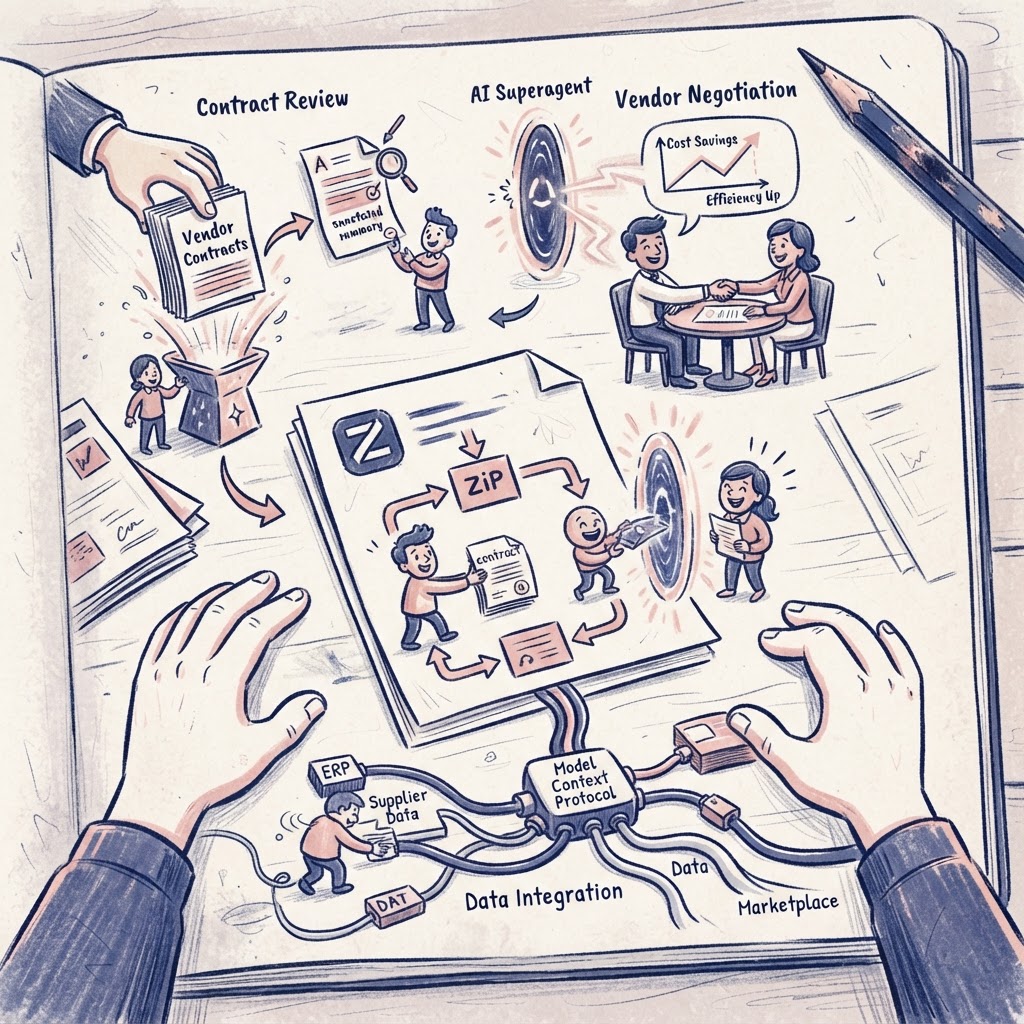
Explore how Zip's new suite of AI Superagents is transforming procurement by autonomously handling complex tasks like contract review and vendor negotiation. This technology integrates with the Model Context Protocol to bridge the gap between enterprise data and advanced generative AI.
Key Takeaways
- Introduction of five specialized AI Superagents for end-to-end procurement automation
- Native implementation of Model Context Protocol for secure AI data integration
- Proven reduction in manual cycle times and friction for Fortune 500 customers

Discover how autonomous procurement is redefining supply chain efficiency by enabling real-time risk optimization and supplier performance management. Learn why early adopters of agentic AI are seeing up to five times greater return on investment and a 60% boost in overall productivity.
Key Takeaways
- Autonomous procurement systems allow for real-time optimization of supplier performance and demand risk management.
- Leading organizations are redesigning their entire procurement architecture around AI to move from reactive to predictive insights.
- While routine tasks are increasingly automated, strategic trade-offs and ethical judgments remain critical human-led functions.

Explore how agentic AI transforms procurement by compressing sourcing cycles from weeks into mere days through automated benchmarking and RFP generation. This report details the shift toward autonomous workflows where AI agents handle operational tasks, allowing human teams to focus on high-value strategy.
Key Takeaways
- Agentic AI can reduce sourcing cycle times by up to 80% by handling spend analysis and bid evaluation autonomously.
- Contract draft-to-approval times are slashed by over 70% with agents providing continuous monitoring of obligations.
- Supplier onboarding processes in complex industries like pharma can be reduced from 35 days to just 4 days.
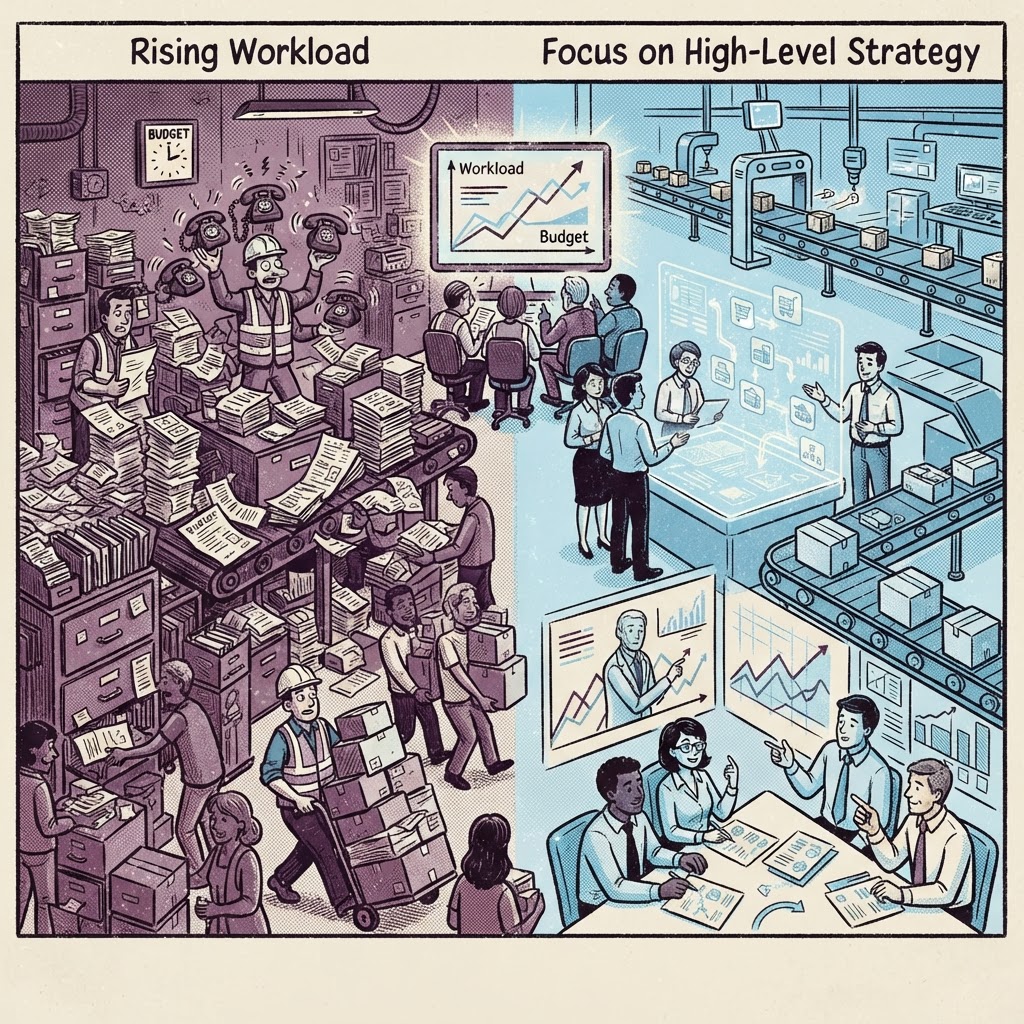
Addressing the disconnect between rising workloads and stagnant budgets, this report explores the role of autonomous procurement in 2024 and beyond. It predicts that AI agents will manage the vast majority of transactional tasks, allowing human teams to focus on high-level strategy.
Key Takeaways
- AI agents projected to handle 60-70% of transactional procurement workflows by 2028
- Predictive risk monitoring flags potential supply chain disruptions weeks before they occur
- Autonomous negotiation support provides real-time benchmarking and automated counteroffer modeling
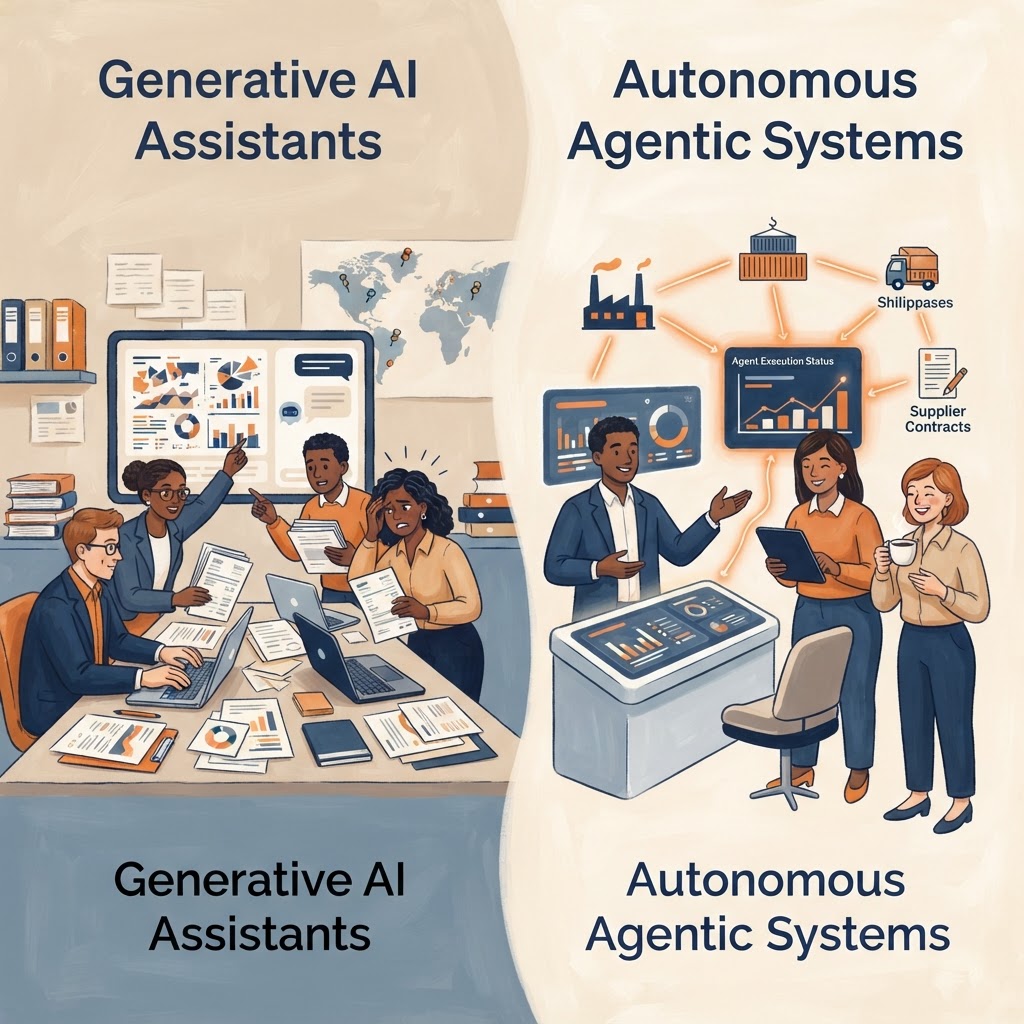
This article details the evolution from generative AI assistants to autonomous agents that can execute sourcing events and manage supplier relations independently. It explores how these systems reduce manual workloads and improve strategic outcomes across complex global supply chains.
Key Takeaways
- Transition from passive AI assistants to goal-oriented autonomous agents
- Significant reduction in logistics and inventory costs through agent-led management
- Automated execution of negotiation strategies and bid evaluations for routine spend categories

Explore how autonomous sourcing is transforming global supply chains by automating repetitive RFX processes. The report details the benefits of AI in enhancing supplier diversity and driving cost savings through intelligent negotiation bots.
Key Takeaways
- Autonomous sourcing bots are drastically reducing the time required for vendor discovery and vetting.
- Intelligent negotiation algorithms are enabling better contract terms by analyzing historical market trends in real-time.
- AI-driven sourcing platforms are increasing access to diverse and sustainable supplier networks through automated matching.

Agentic AI represents a paradigm shift where software acts as an autonomous agent rather than a reactive tool. This article discusses why the data-heavy nature of procurement makes it ideal for implementing agentic sourcing workflows.
Key Takeaways
- Agentic AI can move beyond simple chat to execute complex end-to-end procurement workflows autonomously.
- Procurement data structures provide a structured environment that allows AI agents to accurately assess supplier risks.
- The transition to agentic systems requires a focus on data quality and robust governance frameworks.

McKinsey's recent research showcases how linked AI agents are rebuilding external-services sourcing strategies to achieve significant double-digit savings. The report examines the industry move from static spend analysis to dynamic, agent-led scenario modeling and negotiation.
Key Takeaways
- Linked AI agents integrate spend and market data to provide real-time price-trend insights and autonomous demand simulations.
- Deployment of agentic sourcing tools has resulted in 12–20% savings on complex categories such as contact centers and financial services.
- The shift to autonomous sourcing allows category managers to focus on high-level strategy rather than manual data preparation and RFX assembly.

This article explores how autonomous AI agents are moving procurement beyond simple task automation to goal-oriented orchestration. It outlines the strategic shift necessary for CPOs to integrate these agents into source-to-pay processes effectively to drive value.
Key Takeaways
- AI agents act as virtual team members capable of executing tasks autonomously based on machine learning and natural language processing.
- Successful adoption requires a transition from task-based automation to goal-driven orchestration across the entire source-to-pay lifecycle.
- CPOs must prioritize data quality and workforce alignment to ensure AI agents deliver measurable long-term ROI and operational efficiency.
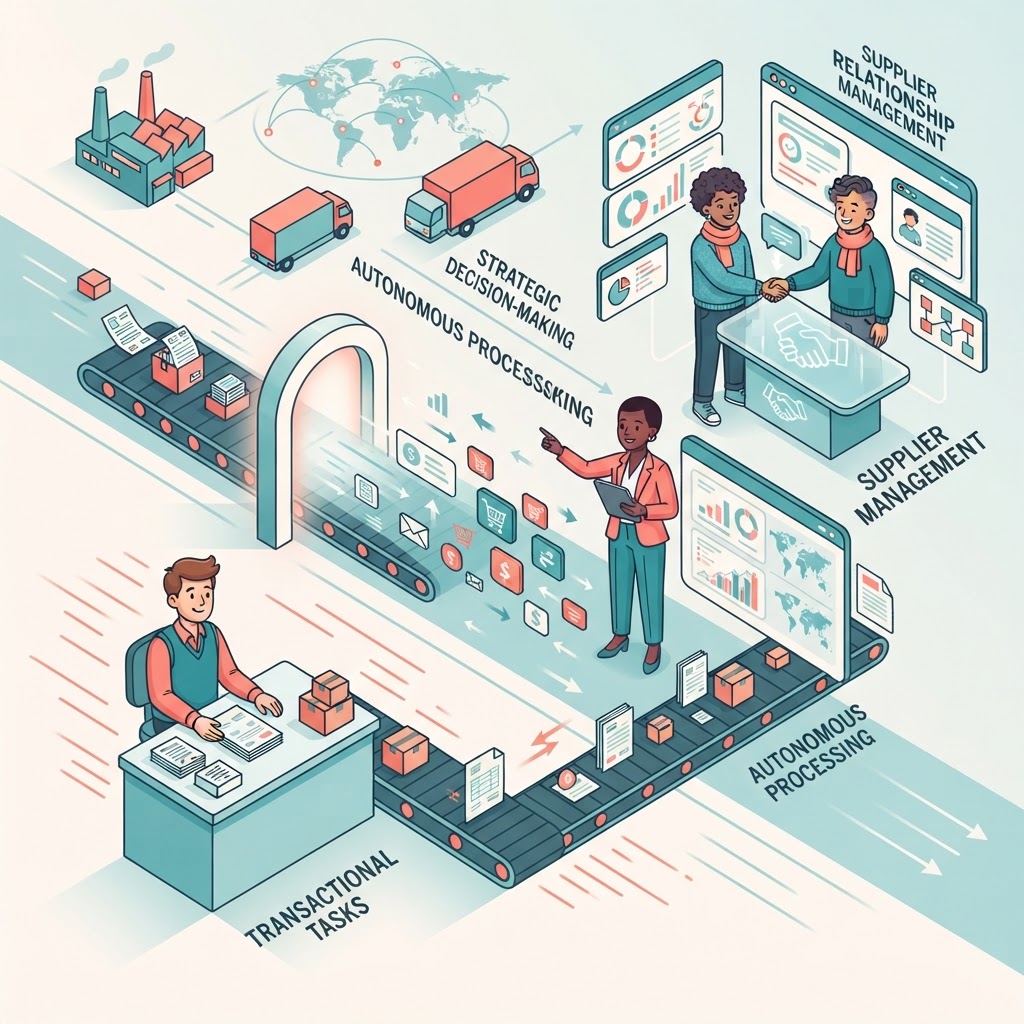
This report explores how autonomous procurement systems are moving beyond simple automation to handle tactical buying and strategic decision-making. By integrating agentic AI, procurement teams can shift their focus from transactional tasks to high-value supplier relationship management.
Key Takeaways
- Eliminates manual bottlenecks in tactical spend and tail-spend management
- Utilizes AI agents for real-time market intelligence and supplier risk vetting
- Optimizes cost savings through automated bidding processes and price comparisons

Zip has introduced purpose-built AI agents designed to automate complex procurement workflows including intake, sourcing, and contract renewals. These agents leverage generative AI to drive agentic sourcing by autonomously conducting supplier research and data extraction.
Key Takeaways
- Automates end-to-end sourcing workflows including intelligent supplier discovery
- Significantly reduces procurement cycle times through automated data synthesis
- Enables autonomous negotiation support and proactive contract renewal management

This deep dive explains the mechanics of agentic AI in autonomous sourcing, focusing on how multiple specialized agents collaborate on complex tasks. Learn how these systems monitor markets, assess supplier risk, and execute negotiations autonomously to drive continuous value.
Key Takeaways
- Autonomous sourcing relies on a network of cooperating agents, such as market monitors and negotiation specialists.
- Agentic systems can sense market changes and recommend immediate sourcing adjustments based on live data feeds.
- Implementing agentic AI allows procurement departments to achieve continuous, data-driven sourcing instead of periodic reviews.
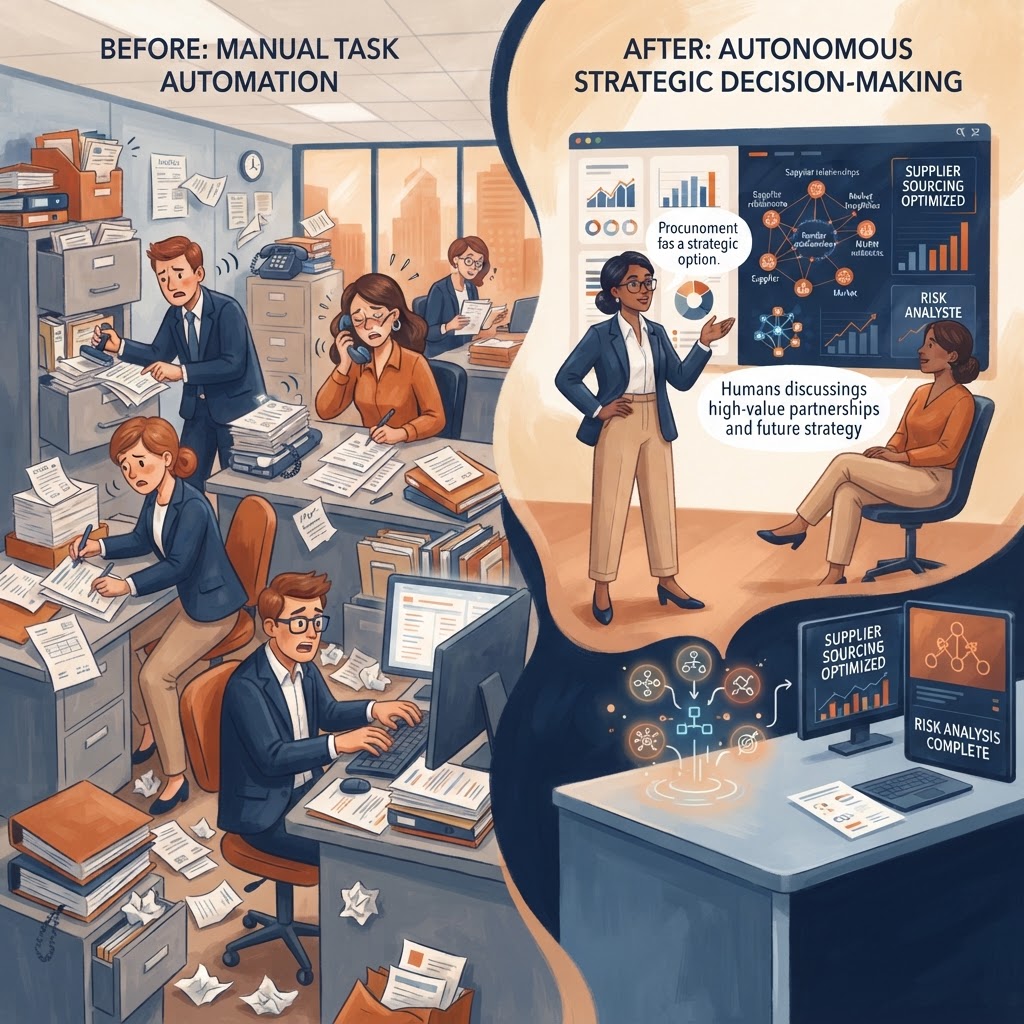
Discover how agentic AI systems are evolving procurement from simple task automation to autonomous strategic decision-making. This report highlights the shift toward AI agents that can independently manage complex sourcing workflows while humans focus on high-value supplier relationships.
Key Takeaways
- Agentic AI moves beyond generative text to execute end-to-end procurement workflows with minimal human intervention.
- Organizations are using autonomous agents to balance supply chain resilience, sustainability, and cost efficiency in real-time.
- Success requires a shift in operating models where procurement teams act as orchestrators of specialized AI agent networks.

Spend Matters examines the shift from AI copilots to autonomous agents that can execute complex sourcing tasks without human intervention. This analysis provides a roadmap for procurement leaders to move beyond generative AI experiments toward scalable, agentic solutions.
Key Takeaways
- Differentiates between task-based AI assistants and goal-oriented autonomous agents
- Provides a 2025-2030 maturity roadmap for agentic procurement technology adoption
- Highlights the importance of new governance models for managing independent AI agents

Learn how agentic AI is shifting procurement from manual task execution to autonomous, outcome-driven workflows. This guide explores multi-agent orchestration and how AI-native systems act independently to negotiate and optimize complex supply chains.
Key Takeaways
- Moves procurement from digitizing processes to autonomous execution of end-to-end workflows
- Multi-agent systems bridge fragmented data to provide unified supply chain visibility
- Enables procurement teams to focus on strategic high-value judgment rather than tactical tasks

GEP reveals that 89% of procurement leaders expect agentic AI to drive a step-change in process efficiency and autonomy by 2026. This research highlights the transition from reactive supply chain management to proactive, AI-driven risk monitoring.
Key Takeaways
- Clean data is identified as the critical prerequisite for scaling agentic AI across the source-to-pay lifecycle.
- AI agents are increasingly being used to manage structured tasks like procure-to-pay and spend analytics autonomously.
- The majority of global procurement organizations are currently moving from AI pilots to scaled agentic deployments.
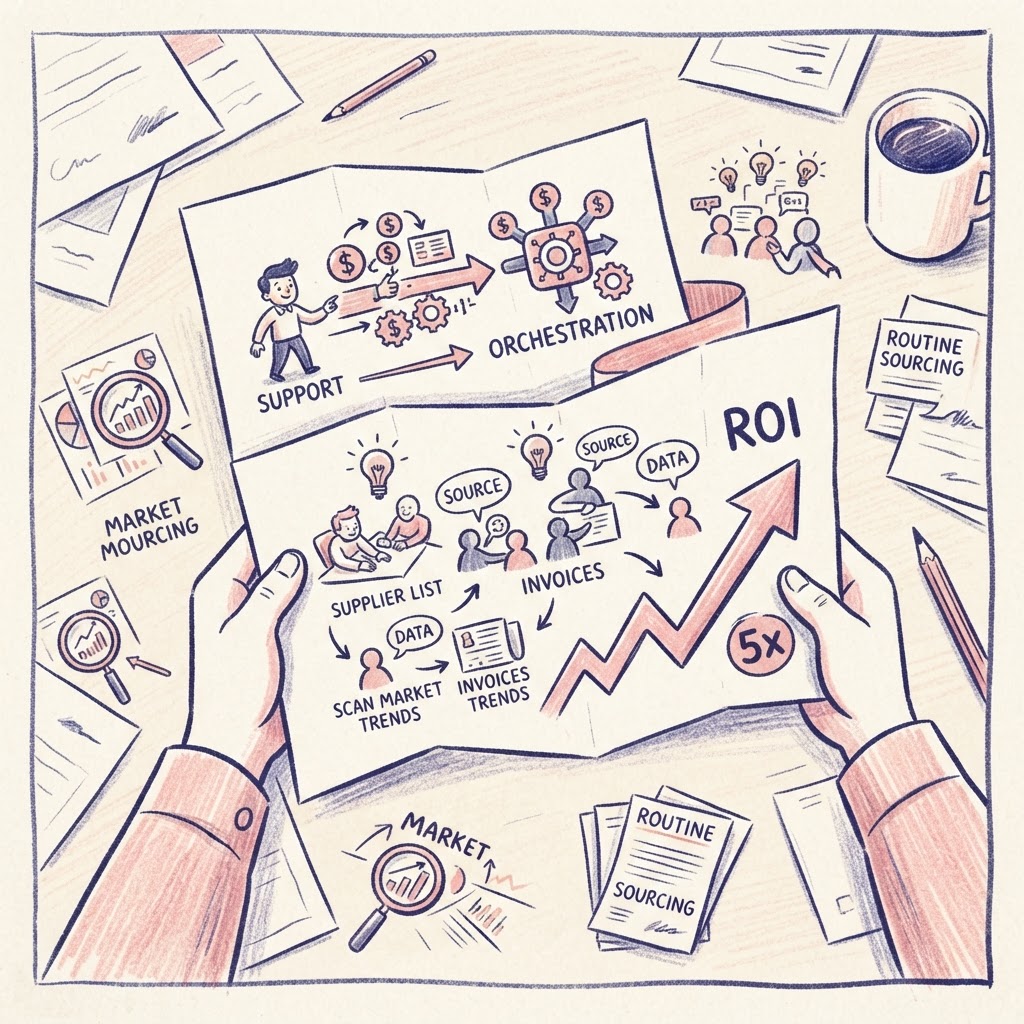
Bain & Company explores how agentic AI is shifting procurement from decision support to autonomous orchestration, potentially increasing ROI by five times. The report details how AI agents handle routine sourcing and category intelligence to maximize productivity.
Key Takeaways
- AI-enabled procurement can boost productivity by 60% and deliver up to 7% in incremental savings.
- Agentic AI transitions machines from supporting human decisions to autonomously orchestrating them.
- Early adopters are already scaling solutions projected to save large enterprises hundreds of millions of dollars.
Leading the Future of AI Procurement in Australia
As supply chains grow more complex across Australia, the shift from manual procurement to agentic sourcing is a major change. AI agents independently research vendors, compare pricing and prepare contract terms, freeing procurement teams to focus on strategy and relationships.
Organisations using AI procurement tools see sourcing cycle times fall sharply, turning month-long tenders into events that run in days. Continuous market monitoring lets these agents flag supplier risk early, surface hidden savings and keep supply running.